Macroplastic Marine Debris Patterns and Distribution Based on Oceanography and Community
Mapping macroplastic pollution in Muara Gembong through oceanographic dynamics and community perspectives.
Overview
Plastic pollution in Muara Gembong reflects ocean dynamics and community activities.
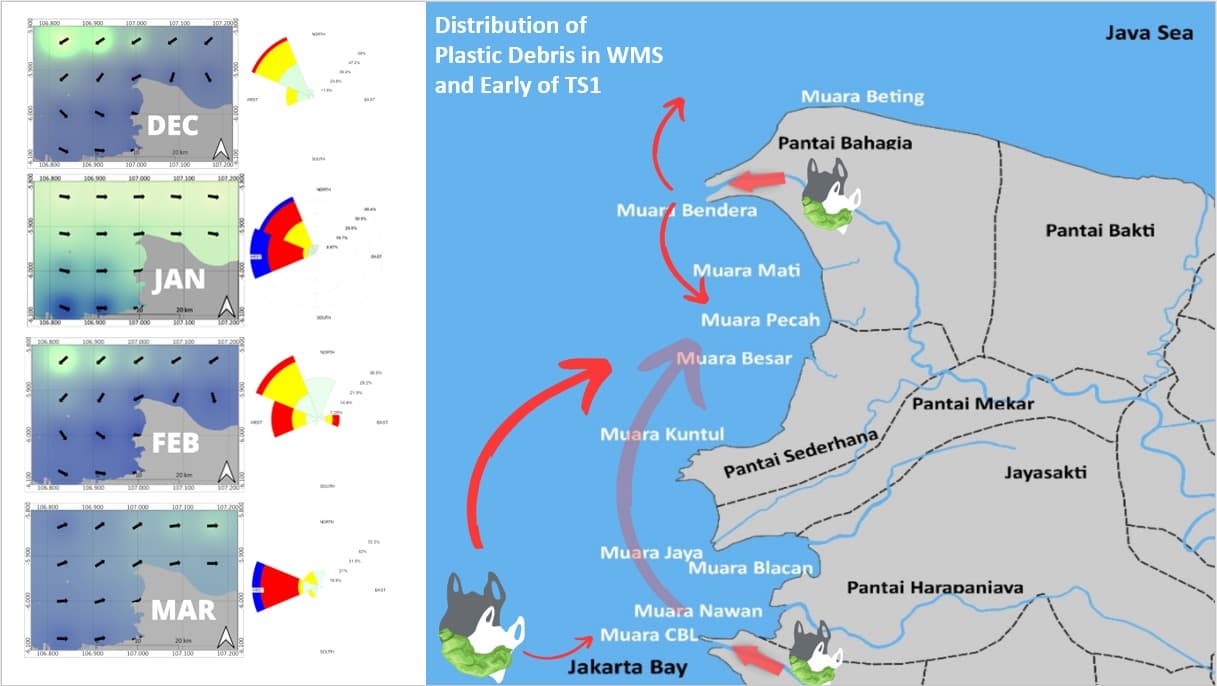
Muara Gembong, located downstream of the Citarum River, faces persistent macroplastic pollution influenced by oceanographic dynamics and waste transport from surrounding areas. This multidisciplinary research investigates the relationship between macroplastic debris distribution, oceanographic conditions—including currents, tides, and wind—and local community perspectives. Debris accumulation hotspots were mapped using GPS across river, coastal, and ecosystem areas, while community perceptions were collected through interviews, Focus Group Discussions, and questionnaires involving local communities, NGOs, and government representatives. The findings indicate that macroplastic accumulation is strongly associated with seasonal current and wind patterns, particularly during the West Monsoon and early Transitional Season I, with local communities identifying the Citarum River, surrounding waterways, and Jakarta Bay as major potential sources of transported plastic waste.
Proposal
Details
Muara Gembong faces persistent plastic pollution driven by oceanographic and human factors.
Plastic pollution has emerged as one of the most persistent environmental challenges affecting coastal and estuarine ecosystems worldwide. In downstream coastal areas, the distribution and accumulation of plastic debris are shaped by a combination of riverine transport, oceanographic processes, and human activities. Understanding these interactions is particularly important in densely populated coastal regions where marine debris can originate from multiple sources and be transported across administrative boundaries. Muara Gembong, located downstream of the Citarum River and connected to Jakarta Bay, is one such area where plastic pollution remains a persistent environmental concern. The accumulation of plastic debris in Muara Gembong is influenced not only by the physical movement of water, currents, tides, and winds, but also by the perceptions and activities of local communities regarding the sources and pathways of plastic waste.
Mission & Objectives
Mapping macroplastics, oceanographic factors, and community perceptions in Muara Gembong.
This study aims to identify plastic debris accumulation hotspots in the Muara Gembong area and analyze the factors influencing their distribution patterns. Additionally, it examines public perceptions regarding the locations and sources of plastic debris. Despite the environmental significance of this issue, research that integrates oceanographic factors with community perspectives is still limited. By mapping debris distribution through primary data collection on accumulation points and assessing public perception using the Hotspot Monitoring Database (Martens & Huntington, 2012; World Bank Group, 2018; Connan et al, 2021), this data can serve as a foundation for further research and a key reference for stakeholders and the local community in developing effective waste management policies for the Muara Gembong area.
Environmental Commitments
Reducing marine plastic pollution through community action and evidence-based waste management.
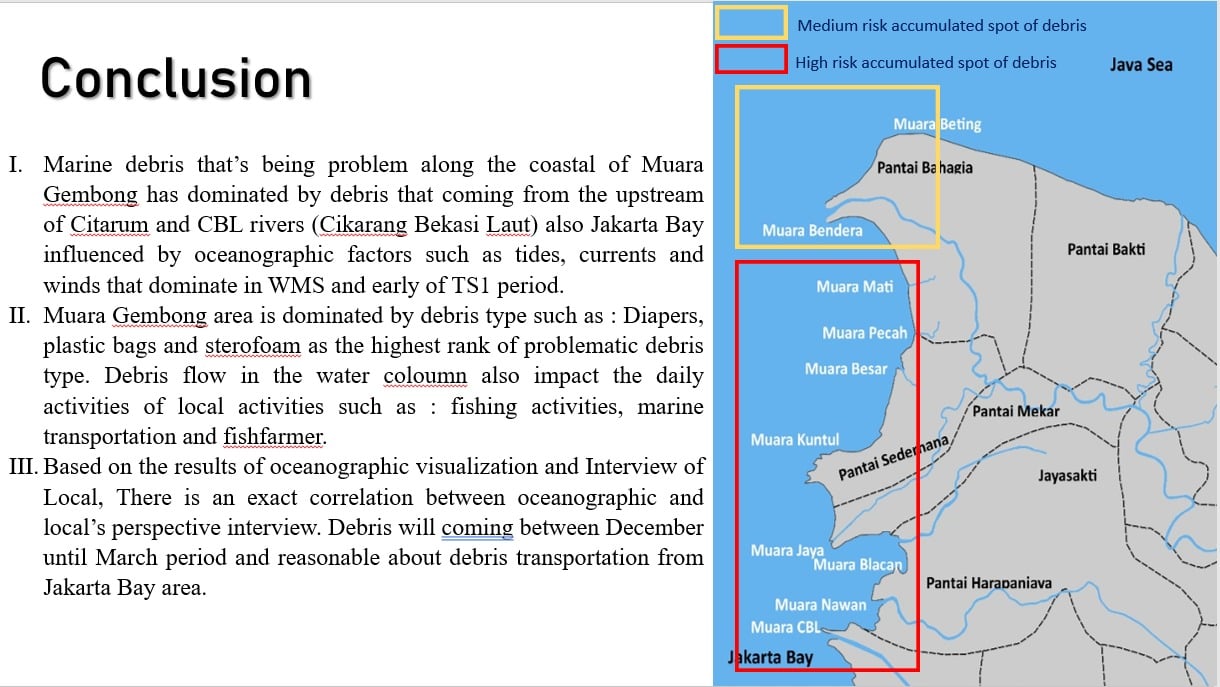
This research demonstrates a commitment to reducing marine plastic pollution in Muara Gembong through science-based monitoring, community engagement, and improved waste management. By integrating oceanographic data with community perspectives, the study supports a more comprehensive understanding of how macroplastic debris is transported, accumulated, and distributed across coastal and estuarine environments. The identification of macroplastic hotspots, particularly around the CBL, Bendera, and Jaya estuaries, provides evidence that can support targeted monitoring and pollution prevention. The findings highlight the important role of seasonal currents, wind patterns, and tidal dynamics, especially during the West Monsoon Season and early Transition Season 1, when external plastic waste is most likely to be transported toward the Muara Gembong coastline. The research also places local communities at the center of environmental action. Community interviews and Focus Group Discussions provide valuable local knowledge regarding plastic waste sources, accumulation patterns, impacts on livelihoods, and existing waste management practices. The findings emphasize the need to strengthen community participation while reducing dependence on informal or environmentally harmful disposal practices such as open burning. The study further supports collaborative environmental governance by encouraging cooperation among local communities, government institutions, NGOs, universities, research organizations, and other relevant stakeholders. Community recommendations—including improved waste management systems, government training programs, coastal waste barriers, stronger regulations, and environmental education—can contribute to locally appropriate and long-term solutions. Ultimately, this research aims to contribute to healthier coastal ecosystems and more resilient coastal communities by providing evidence for preventive, collaborative, and context-specific plastic pollution management. The approach can also serve as a foundation for continued monitoring and future interventions to reduce plastic leakage from rivers and coastal areas into the marine environment.
Outcomes / Results
Mapped plastic hotspots and linked macroplastic distribution to oceanographic and community insights.
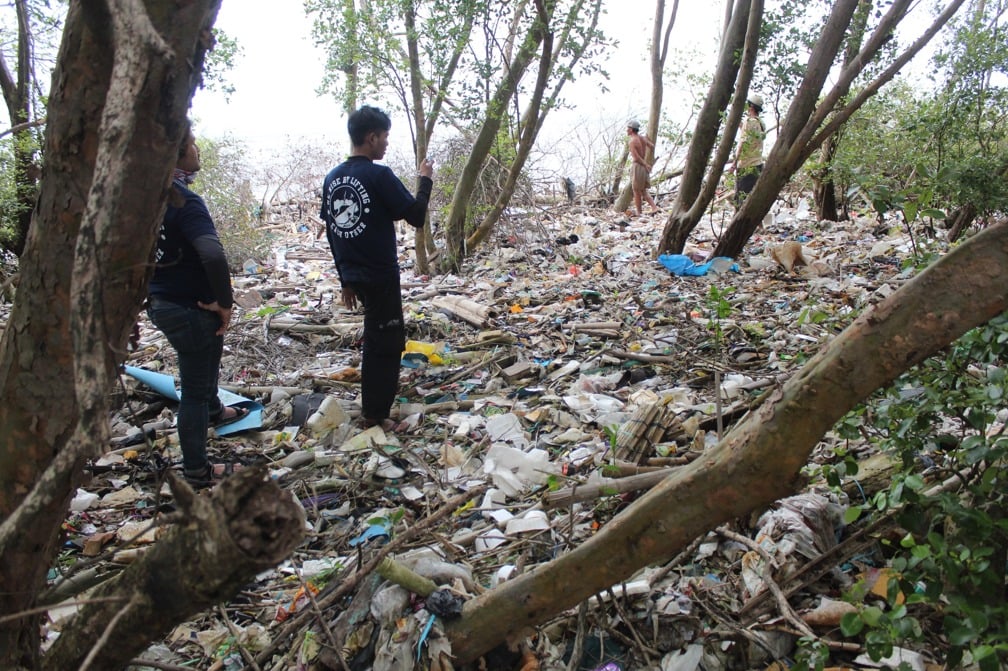
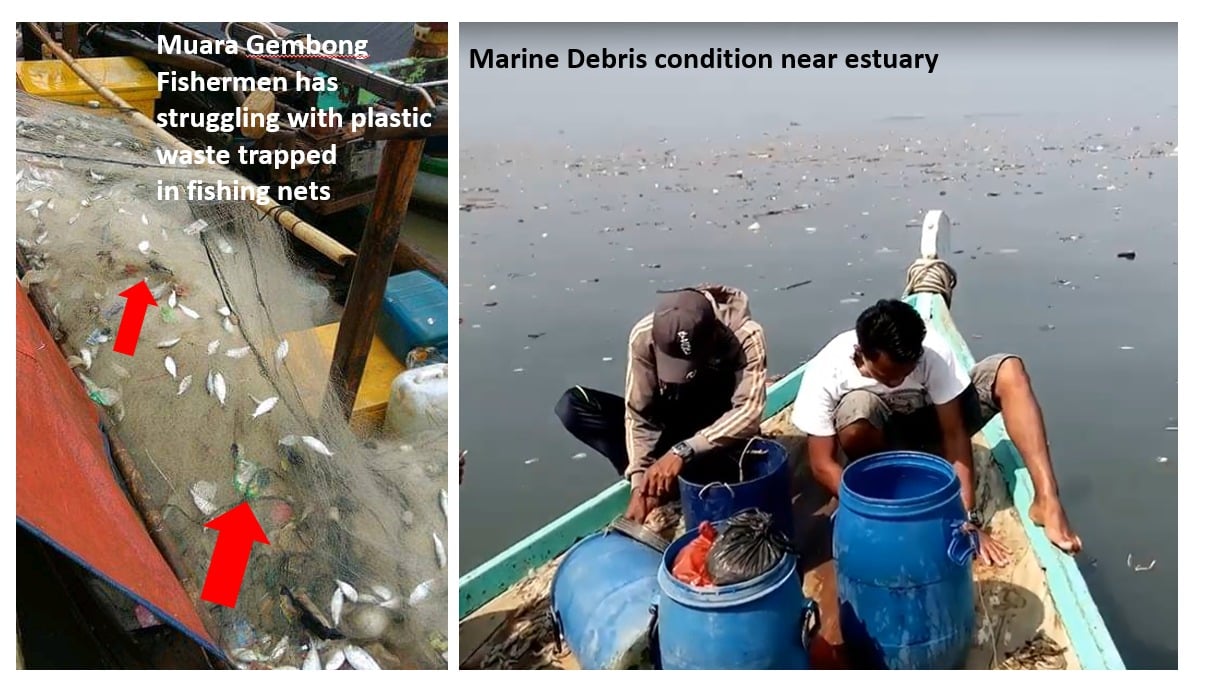
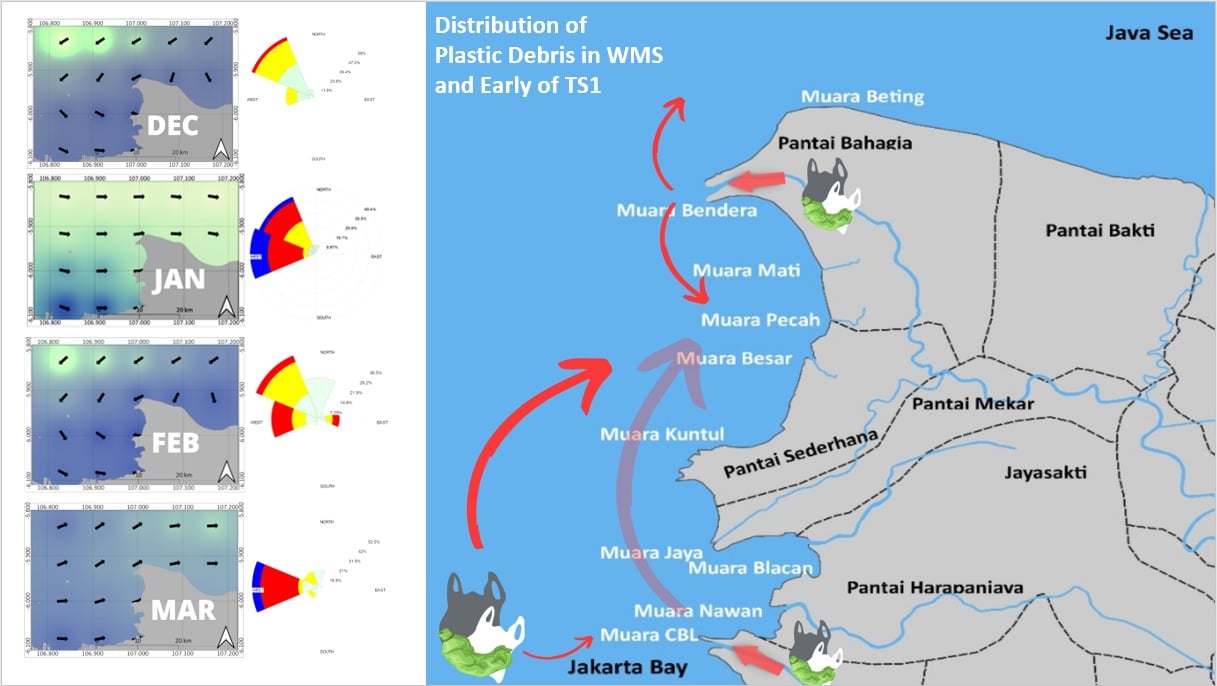
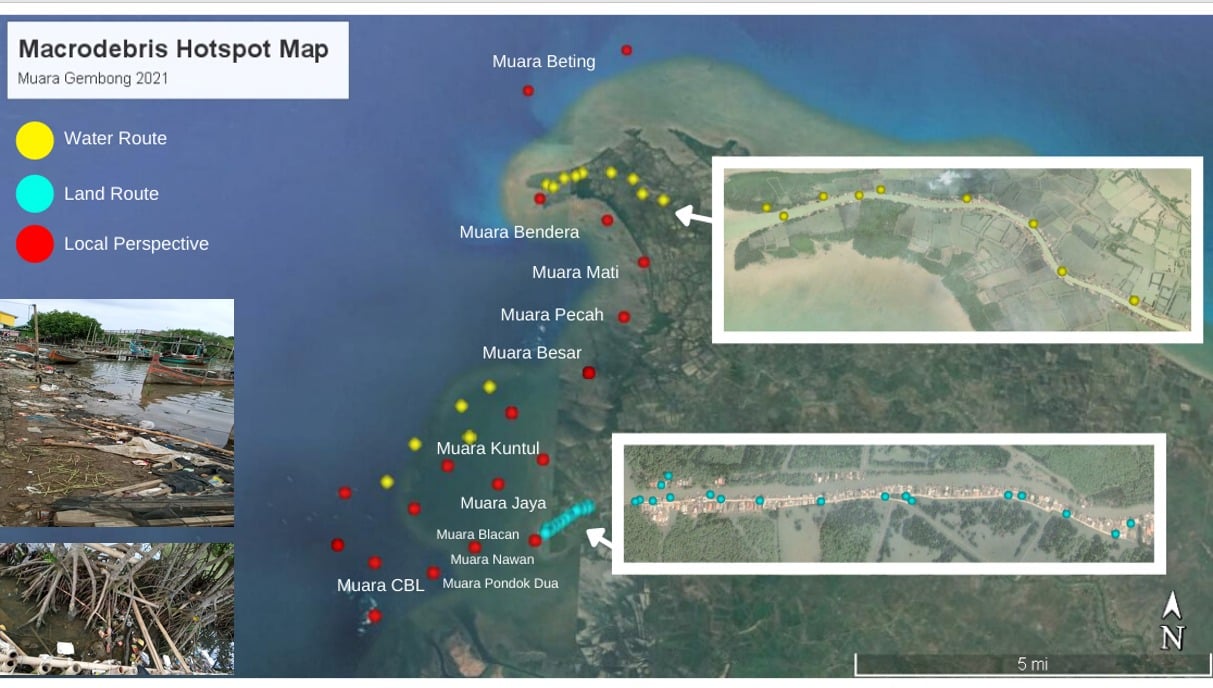
The study produced an integrated assessment of macroplastic pollution in Muara Gembong by combining hotspot mapping, oceanographic analysis, and local community knowledge. A total of 51 macroplastic-related hotspots were identified through three monitoring approaches: 14 points along the water route from the Citarum River toward Bendera Estuary, 18 points through land-based monitoring, and 19 points based on local community perspectives. The results indicate that macroplastic accumulation is strongly associated with seasonal oceanographic conditions. During the West Monsoon Season (WMS), prevailing west and northwest winds and west-to-east or southeastward currents facilitate the transport of plastic debris from Jakarta Bay and surrounding estuaries toward the Muara Gembong coastline. The highest potential for debris transport and accumulation occurs during the WMS and early Transition Season 1 (TS1), particularly from December to March. During the East Monsoon Season and Transition Season 2, predominantly westward circulation reduces the potential for debris accumulation along the coast. Tidal dynamics also contribute to debris redistribution along riverbanks, estuaries, coastal settlements, and mangrove areas. Community observations of increased debris accumulation during high-tide periods are consistent with the oceanographic findings. Tidal flooding and elevated water levels can transport floating debris further inland, increasing accumulation in vulnerable coastal areas. Interviews with 100 respondents across six villages identified plastic bags, baby diapers and sanitary products, food and beverage packaging, styrofoam, and plastic bottles as major types of macroplastic waste. Notably, 92% of respondents believed that most marine debris originated outside Muara Gembong. The Cikarang Bekasi Laut (CBL) River was identified by 96 respondents as a major potential source, while Jakarta/Tanjung Priok/Cilincing and the Citarum River were also perceived as external contributors. The study identified significant socioeconomic impacts, particularly on fishing, fish catches and income, aquaculture, and water transportation. Debris frequently interferes with boat propellers and other daily activities. Existing responses include waste burning, collection by informal waste workers, waste banks, and environmental programs. Communities recommended improved waste management infrastructure, stronger government regulations and training, debris barriers in rivers and coastal areas, and greater collaboration among communities, government, NGOs, and research institutions. Overall, the study demonstrates a clear relationship between macroplastic distribution, seasonal oceanographic processes, and community observations. The hotspot mapping and community-based evidence provide a foundation for targeted monitoring, pollution prevention, and locally appropriate marine plastic waste management strategies in Muara Gembong.
Risks
Macroplastic pollution threatens coastal ecosystems, livelihoods, transport, and community resilience.
Macroplastic pollution in Muara Gembong presents interconnected environmental, social, and economic risks. The accumulation of plastic debris along estuaries, riverbanks, coastal settlements, and mangrove areas can degrade coastal ecosystems and increase the persistence of pollution in marine and terrestrial environments. Continuous transport of debris from upstream rivers and Jakarta Bay also creates a risk of repeated accumulation, making local clean-up efforts insufficient without addressing external sources. Oceanographic conditions increase the risk of spatial and seasonal redistribution of plastic debris. During the West Monsoon Season and early Transition Season 1, prevailing winds and currents can transport debris from external areas toward the Muara Gembong coastline. Tidal fluctuations and tidal flooding can further move floating debris inland, increasing exposure in coastal settlements and vulnerable ecosystems. These processes make plastic pollution dynamic and difficult to manage through localized interventions alone. The pollution also creates direct risks to local livelihoods. Plastic debris can interfere with fishing activities, reduce fish catches, and contribute to declining household income. Fish farmers may also face impacts when debris accumulates in aquaculture areas, while floating waste can obstruct boat propellers and disrupt water transportation. These impacts can reduce the efficiency and safety of daily economic activities that depend on coastal and marine resources. Community waste management practices present additional environmental risks. Although informal waste collectors contribute to plastic recovery, some household waste is still burned or disposed of through inappropriate channels. Open burning can create additional environmental and public exposure risks, while inadequate waste collection and management can increase the likelihood of plastic entering rivers and coastal waters. Another major risk is the continued inflow of plastic debris from outside Muara Gembong. The strong perception among local communities that the CBL River, Jakarta Bay, and other external waterways are major sources highlights the transboundary nature of the problem. Without coordinated action across upstream and downstream areas, plastic waste may continue to accumulate despite local mitigation efforts. The study therefore highlights the need for preventive and collaborative risk management. Improved waste infrastructure, river and coastal debris interception, stronger regulations, environmental education, community participation, and coordination among government institutions, NGOs, research organizations, and local communities are important to reduce plastic leakage and strengthen the resilience of Muara Gembong's coastal communities and ecosystems.
Industry / Context
Marine pollution, coastal management, ocean research, and community-based environmental action.
This research sits at the intersection of marine pollution management, coastal and ocean research, environmental sustainability, and community-based resource management. Muara Gembong, located on the northern coast of Bekasi Regency and connected to the Citarum River and Jakarta Bay, is a highly relevant context for understanding the movement and accumulation of plastic debris across interconnected riverine, estuarine, and coastal systems. Plastic pollution is a major challenge for coastal communities and marine ecosystems. Due to its persistence and ability to be transported over long distances, macroplastic debris can move from upstream rivers into estuaries and coastal waters, where it accumulates in riverbanks, mangrove ecosystems, settlements, and shorelines. In Muara Gembong, the issue is particularly complex because plastic debris can originate from both local activities and external sources, including upstream waterways and Jakarta Bay. The research contributes to the marine environmental monitoring and coastal management sector by integrating oceanographic observations with community-based data. Understanding seasonal currents, wind patterns, and tidal dynamics is important for identifying when and where plastic debris is most likely to be transported and accumulated. This information can support more targeted monitoring, collection, interception, and prevention strategies rather than relying only on periodic coastal clean-up activities. The study also highlights the importance of local communities within the environmental management context. Communities are directly exposed to plastic pollution and experience impacts on fishing, aquaculture, water transportation, income, and daily activities. Their observations provide valuable contextual knowledge that can complement scientific monitoring and help identify pollution sources, accumulation hotspots, and practical management priorities. From a policy and implementation perspective, the findings are relevant to government agencies, environmental organizations, research institutions, NGOs, coastal communities, and waste management stakeholders. The transboundary nature of plastic transport demonstrates the need for coordinated action between upstream and downstream areas, particularly across river and coastal management systems. Overall, the research supports a shift toward integrated marine plastic pollution management that combines environmental data, spatial hotspot mapping, local knowledge, and stakeholder collaboration. Its findings can contribute to evidence-based coastal planning, improved waste management systems, pollution prevention, and the development of locally appropriate interventions for reducing plastic leakage into marine environments.
Hypothesis & Methodology
Combining oceanographic analysis, hotspot mapping, FGD, and community interviews.
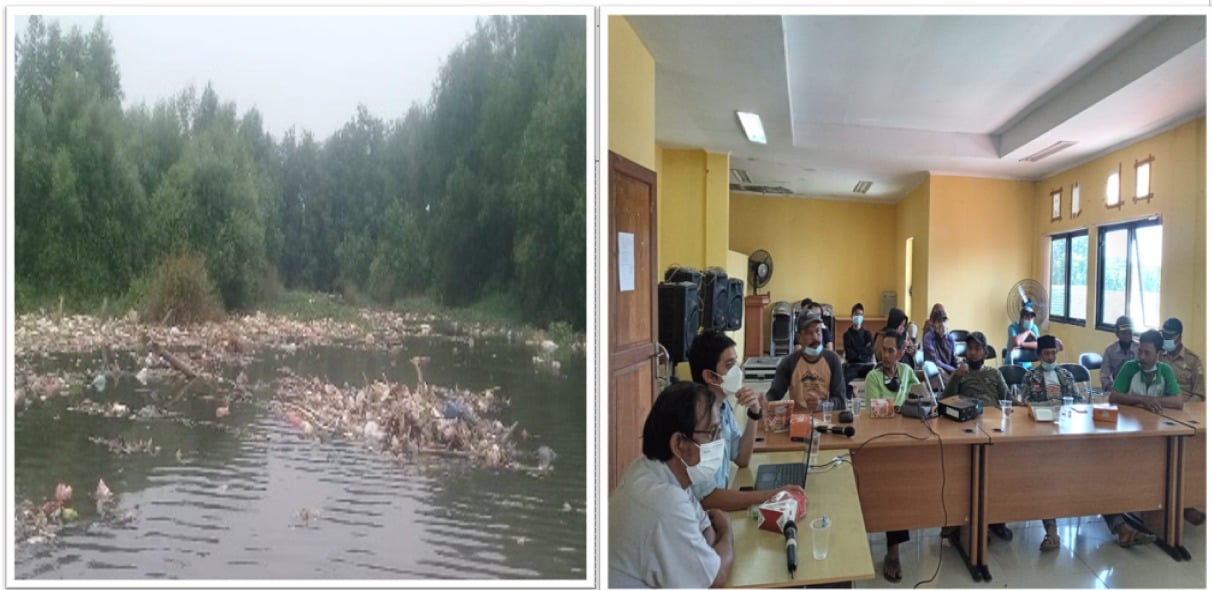
The study was conducted in Muara Gembong Sub-district, Bekasi Regency, West Java, Indonesia, covering six villages and 11 estuaries connected to the Citarum River system. A multidisciplinary approach was applied by integrating secondary oceanographic data with primary debris monitoring and community-based information to assess macroplastic distribution, potential sources, and transport pathways. Oceanographic analysis focused on currents, wind, and tides. Secondary data from 2019 were used to characterize seasonal conditions, with no significant anomalies identified compared with 2021 data. Current data were obtained from Marine Copernicus and visualized using QGIS 3.16. Wind data from Copernicus at 10 m altitude were analyzed using WRPlot 8.0.2, while tidal data from the Indonesian Geospatial Information Agency (BIG) were processed using Microsoft Excel. Daily current and wind data were averaged monthly, while hourly tidal data were also aggregated into monthly values. Analysis was organized into four seasonal periods: West Monsoon Season (WMS; December–February), Transition Season 1 (TS1; March–May), East Monsoon Season (EMS; June–August), and Transition Season 2 (TS2; September–November). Primary data were collected through three approaches. First, a Focus Group Discussion (FGD) was conducted on April 6, 2021, at the Muara Gembong District Office with 19 representatives from six villages. The FGD documented local knowledge regarding plastic waste sources, accumulation areas, transport pathways, and potential management solutions. Second, debris accumulation hotspot sampling was conducted from April 6–10, 2021, using GPS marking to identify macroplastic accumulation locations. Surveys followed two routes: a land route using motorcycles along the Citarum River toward the Jaya Estuary tributary, and a water route using a boat along the Citarum River toward Bendera Estuary. Hotspot locations were subsequently compared with seasonal oceanographic conditions to assess potential relationships between environmental processes and debris distribution. Third, interviews were conducted with 100 local residents from the six villages between August 1 and September 10, 2021, using accidental sampling. Interviews were conducted by telephone to minimize COVID-19 transmission risks. The questionnaire covered perceived waste types, sources, accumulation areas, transport mechanisms, seasonal patterns, socioeconomic impacts, household waste management practices, and preferred solutions. Finally, oceanographic data, GPS-based hotspot mapping, FGD findings, and interview results were integrated to compare environmental conditions with community observations. This approach enabled the identification of potential macroplastic sources, transport pathways, accumulation hotspots, and community priorities for improved marine plastic waste management in Muara Gembong.
Team
Research Lead
Alfinna Yebelanti is a marine science and climate innovation professional serving as Research Lead, with expertise in ocean and coastal research, stakeholder engagement, and environmental project management. In this study, she contributed to research coordination, methodology development, data integration, and interpretation of oceanographic and community-based findings. Her contribution focused on connecting macroplastic hotspot mapping with seasonal oceanographic conditions and local community perspectives to strengthen evidence-based understanding of plastic pollution in Muara Gembong. She also supported the translation of research findings into practical recommendations for marine plastic pollution management and multi-stakeholder collaboration.
Funding Rounds & Rewards
Funding Rounds & Rewards in development
Fund your project in stages: define goals, deliverables and timelines per round to give funders a clear picture of delivery.
Documents
Frequently Asked Questions
Comments
Be the first to leave a comment