Folktales, Oral Storytelling, Local Narratives: Study of Socio-Cultural Spaces and Communities
Community’s local narratives are entering new communication environments
Overview
Local narratives explain misfortune and negotiate the relationship between human beings and their surroundings
Himachal Pradesh is widely known as Dev Bhūmi, the land of gods. In many parts of the state, mountains, forests, rivers, springs, and grazing grounds are understood not only as natural features but also as places associated with deities, spirits, ancestral memories, and community traditions. Village deities, locally known as devtās and devīs, occupy an important place in social life. Their presence is experienced through rituals, festivals, oracular consultations, oral accounts, and everyday practices. Alongside these traditions, stories about yoginīs, jogṇīs, ghosts, forest beings, and figures such as Bansheera continue to circulate through conversations, local storytelling, and, increasingly, digital media. These stories are more than accounts of extraordinary events. They offer ways of understanding the world, remembering places, explaining misfortune, and negotiating the relationship between human beings and their surroundings. A story about a forest spirit, for example, may express fear, reverence, a community's memory of a place or an expectation about how people should behave there. However, the meaning of such a story cannot be assumed in advance. Its interpretation may differ between generations, among social groups, and across the contexts in which it is told. The ecological significance of these narratives becomes particularly relevant in the Western Himalayas, where communities experience environmental change alongside changes in livelihoods, tourism, infrastructure, and patterns of settlement. Landslides, floods, changing rainfall, pressure on water sources, and development projects have brought renewed attention to the relationship between people and mountain environments. These issues are commonly examined through scientific research, disaster management, and environmental policy. Yet, the ways in which local communities interpret their surroundings are also shaped by cultural memory, religious practices, everyday experience, and inherited narratives.
Proposal
Details
It approaches storytelling as a form of communication through which cultural meanings are produced, shared and contested
Existing scholarship on the Western Himalayas provides valuable insights into local religious traditions, oral storytelling, sacred landscapes, customary resource management, and environmental change. However, these subjects are often examined through separate academic approaches. Folklore studies may focus on narrative forms, cultural memory and performance; religious anthropology may investigate ritual authority and relations with deities; and environmental research may concentrate on ecological processes, hazards and resource management. An important communication question emerges at the intersection of these fields: how do stories acquire meaning in particular social settings, how are those meanings transmitted between generations, and what happens when narratives move from oral settings into digital media? The relationship between storytelling and environmental understanding requires particular care. A narrative associated with a forest or water source may communicate respect for a place, but this does not establish that it originated as a conservation mechanism or that it currently changes people's behavior. Similarly, a story about a deity's anger following a flood may express a moral or religious interpretation of an event without providing a scientifically established explanation for the hazard. A digital storyteller may also present a local legend as an ancient environmental warning even when the historical basis for that interpretation remains uncertain. The research problem, therefore, is not simply the documentation of endangered folktales. It is the need to understand storytelling as a living communication practice situated within changing cultural, social, and media environments. This requires attention to the relationship between the story itself, the context in which it is told, the interpretations of its listeners, the practices associated with it, and its representation through digital platforms.
Mission & Objectives
To examine how selected folklores, oral stories and local narratives communicate cultural and ecological meanings
1. To document selected folktales, legends, and community narratives and examine the social contexts in which they are told and received in selected communities. 2. To explore the cultural, moral, and ecological meanings that storytellers and listeners associate with these narratives. 3. To investigate how narratives are transmitted, adapted, and interpreted across generations and among community members with different social experiences. 4. To compare selected stories and narratives with their representations in podcasts, YouTube videos, and other relevant digital media, focusing on changes in narrative structure, contextual framing, and audience address. 5. To examine how, if at all, community members connect these narratives with everyday environmental practices, relationships with particular places, and interpretations of environmental change.
Environmental Commitments
Narrative and discourse approaches will help examine how stories are organised and what they emphasise
The study will draw on three complementary perspectives: narrative and discourse, cultural memory and oral tradition, and mediation or remediation in digital media. Sacred ecology and environmental anthropology will provide a supporting interpretive perspective.
Outcomes / Results
To investigate the relationships between narrative content, social context, and audience interpretation
The study will focus on a manageable collection of narratives associated with local deities, supernatural or forest beings, particular landscapes, seasonal traditions, or community memories. Stories about Bansheera, jogṇīs, ghosts, or other locally recognized figures may be included where they are relevant to participants and can be documented ethically. The selection will not be restricted to stories that appear to contain environmental messages. Although the study is situated within wider debates about the Western Himalayas, its empirical findings will be based on the selected spaces and communities. It will not claim that the findings represent every region or cultural group in Himachal Pradesh.
Risks
An integrated communication-centered investigation remains necessary
In particular, the proposed study identifies four questions requiring closer empirical attention: 1. How do oral narratives acquire meaning within the everyday social and cultural lives of particular communities? 2. How are their meanings transmitted, adapted, or contested across generations and social groups? 3. What changes when selected narratives are reproduced through podcasts, YouTube videos and other digital formats? 4. How, if at all, do people connect these narratives with environmental practices and contemporary understandings of environmental change? The proposed contribution is not to claim that Himachali folktales have never been studied. Rather, it is to investigate the relationships between narrative content, social context, audience interpretation, everyday practice and digital representation within a focused ethnographic design.
Industry / Context
How environmental meanings are shaped in local narratives?
The proposed research is relevant for three interconnected reasons. First, it addresses the cultural dimensions of environmental understanding. People do not encounter their surroundings exclusively through scientific information or formal environmental messages. They also interpret landscapes through family memories, stories, religious practices, and everyday experiences. Studying these forms of communication can provide a fuller account of how people understand their relationship with forests, water, land, and changing environmental conditions. Second, the study examines the changing circulation of oral traditions in the digital age. Digital media may make regional stories accessible to younger audiences and people outside their places of origin. At the same time, platform-based storytelling may emphasize suspense, fear, supernatural spectacle, or simplified moral lessons. These possibilities should be investigated rather than presumed. Comparing oral accounts with digital representations can reveal what is retained, transformed, omitted, or newly added when a story moves between media. Third, the research contributes by examining how meaning is produced through interpersonal communication, cultural performance, and digital mediation. It shifts attention from media as a channel for transmitting already established knowledge to communication as a process through which knowledge and cultural meanings are interpreted and sometimes contested. The study may also contribute to the responsible documentation of intangible cultural heritage. By attending to local voices, contextual differences, and community perspectives, it can help avoid presenting Himachali traditions as uniform, timeless, or detached from the social realities in which they exist.
Community Impact
How do stories acquire meaning in particular socio-cultural space settings?
The relationship between storytelling and environmental understanding requires particular care. A narrative associated with a forest or water source may communicate respect for a place, but this does not establish that it originated as a conservation mechanism or that it currently changes people's behaviour. Similarly, a story about a deity's anger following a flood may express a moral or religious interpretation of an event without providing a scientifically established explanation for the hazard. A digital storyteller may also present a local legend as an ancient environmental warning even when the historical basis for that interpretation remains uncertain.
Team
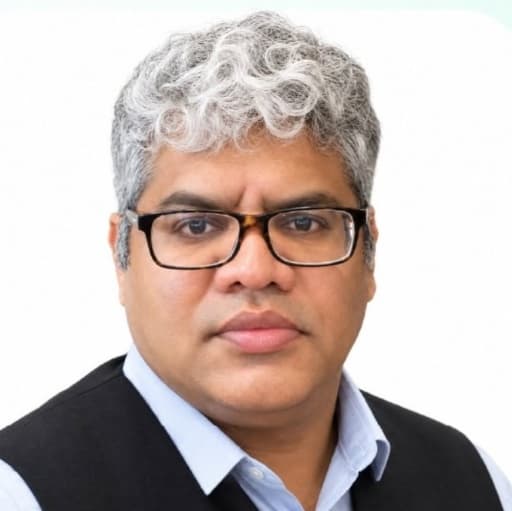
Project Lead
Pradeep Nair is a Senior Professor and Director Research at Central University of Himachal Pradesh, India and is affiliated as a Senior Research Fellow in Earth System Governance Project, Department of Earth Sciences, Uppsala University, Sweden. He is affiliated as an Expert with Sabin Center for Climate Change Law, Columbia Climate School, Columbia University in the city of New York and is a Senior Fellow and Project Lead in Environmental Policy Lab of Indo Pacific Studies Center, Sydney, Australia for the priority impact area – human development and climate change – in the areas of expertise – climate change, capacity development, governance and science to policy.
Research Supervisor
Roshan Lal Sharma is a professor and Chair, Department of English and Dean, School of Languages in Central University of Himachal Pradesh at Dharamshala. A Senior Fulbright Fellow at UW-Madison (USA) and IRH (Institute for research in the Humanities) Honorary Fellow during 2007-08, Sharma has authored Shorter Fiction of Raja Rao (Rawat, 2009), and Walt Whitman (Vrinda, 2000); co-authored Som P. Ranchan: Dialogue Epic in Indian English Poetry (Pencraft, 2012); and co-edited Gendered Spaces and Ruptured Identities: Representation of Women in African Literature (AuthorsPress, 2022), Mapping Diaspora Identities (Anamika, 2017), Communication in Contemporary Scenario: Its Multiple Dimensions (Anamika, 2017), Communication, Entrepreneurship and Finance: Renegotiating Diverse Perspectives (Anamika, 2018), Envisioning Effective Management Communication (Anamika, 2019), and Communication Perspectives in Modern Businesses (Anamika, 2020). He has more than ninety papers and book chapters to his credit published by reputed publishers such as Emerald (Foresight), TU, Dublin (IJRTP), CRC Press, Taylor and Francis, Routledge, Sage, Apple Press, Palgrave MacMillan, IGI International, SHSS, Dialog, Indraprastha, JOA, etc.
Lead Researcher
Dr. Anil Kumar Kashyap is a Professor at HPKV Business School at the Central University of Himachal Pradesh at Dharamshala, India. With over fifteen years of academic, research, editorial, and administrative experience across leading higher education institutions in India, including the Indian Institute of Management Ahmedabad and the National Institute of Fashion Technology, his academic career reflects a unique blend of teaching excellence, impactful research, institutional leadership, and industry engagement. His research lies at the intersection of marketing strategy, consumer behaviour, digital transformation, social media and influencer marketing, artificial intelligence, international marketing, entrepreneurship, and retailing. He has published extensively in internationally recognized SSCI, ABDC, and Scopus-indexed journals and has contributed to several edited books, case studies, and policy-oriented research projects. Dr. Kashyap currently serves as the Editor-in-Chief of Manthan: Journal of Commerce and Management and actively contributes to the global scholarly community as a reviewer for leading journals published by Emerald, Elsevier, Sage, Frontiers, and IGI Global. His editorial experience, coupled with his research leadership, has positioned him as an emerging voice in contemporary marketing scholarship. Beyond research, he has successfully led and contributed to multiple externally funded projects supported by organizations including the Indian Council of Social Science Research (ICSSR), the Ministry of Rural Development, Government of India, and several industry partners. His consultancy assignments have included strategic marketing initiatives for Tihar Prison and rural development interventions for governmental agencies.
Lead Researcher
Deepak Kumar Vaishnav (PhD) is an Assistant Professor in the Department of New Media at the Central University of Himachal Pradesh and serves as the Director of the Behaviour Change Communication (BCC) Lab. His work focuses on using communication as a strategic intervention tool in climate change and public health– the two central pillars of the Lab. He holds a Ph.D. in Health Communication from the Faculty of Management Studies, University of Delhi, India. His research integrates behavioural science, media analysis and intervention design to develop evidence-based communication strategies that influence health decision-making, climate risk perception and sustainable behaviour.
Lead Researcher
Dr. Vikram Kumar Sharma, University Librarian, Central University of Himachal Pradesh, Dharamshala has more than 32 years of professional experience in the field of library & Information Science Management. Graduate in Zoology from Delhi University, Gold Medalist in Bachelor and Master degree level in Library and Information Science from University of Delhi and PhD in Library and Information Science, Dr. Sharma has worked with various reputed libraries including University Librarian, Assam University and University Librarian, Manav Rachna International Institute of Research and Studies, Delhi NCR, Ministry of Home Affairs, Centre for Development of Telematics. His main stint has been with U.S. Government, USIS, The American Library New Delhi for 15 years, where he served in various capacities, including as the Deputy Director, American Library New Delhi He has been a systems administrator at American Libraries in India. .He is a recipient of various scholarships, including JLN Nehru Memorial Fund Award for excellence in higher education pursuits.
Funding Rounds & Rewards
Funding Rounds & Rewards in development
Fund your project in stages: define goals, deliverables and timelines per round to give funders a clear picture of delivery.
Comments
Be the first to leave a comment