
The Damage is done

Photo by Joost Broeker on Unsplash
Recent years have each set new temperature records, and observed impacts (increased droughts, wildfires, floods, and vegetation growth in Antarctica) track warming trajectories modelled decades ago (1). This is not new information: The Limits to Growth, the first computer-based simulation of global human and ecological systems, was published in 1972 and projected substantially the outcomes now being observed, more than fifty years in advance (2). Despite the Kyoto Protocol, the Paris Agreement, and a proliferation of corporate sustainability commitments, global resource consumption and emissions continue to track the least favorable of the scenarios that the original study described.
Sustainability commitments have also proven reversible. Sustainability strategist Andrew Winston, writing in the Harvard Business Review in 2024, noted that for the first time in his own two decades in the field, a wave of large companies publicly and quietly retreated from previously stated climate and social commitments (3). Meanwhile, climate impact and climate responsibility remain sharply misaligned: Oxfam's 2023 Climate Equality report, based on research with the Stockholm Environment Institute, found that the wealthiest one percent of the global population was responsible for as much consumption-based carbon pollution in 2019 as the poorest two-thirds of humanity combined, with the resulting emissions projected to contribute to over a million heat-related deaths by 2030 (4).
This context motivates a re-examination of the operative goal embedded in most corporate and organizational sustainability language. "Sustainable," "net zero," and even "circular" are, in their conventional usage, subtractive concepts: they describe the minimization or neutralization of harm relative to a baseline of ongoing extraction. A regenerative paradigm asks a different question: not how do we do less damage, but how does this organization actively restore, replenish, and add value to the ecological and social systems it depends on.
Less bad was never enough - Why circularity, on its own, is an insufficient target
The circular economy has become the dominant vocabulary for post-growth industrial design, and for good reason: replacing the linear take–make–waste model with closed-loop material cycles reduces extraction and waste at the margin. But circularity, understood strictly as loop-closing, is structurally incomplete. Even a perfectly closed material loop, achieved instantaneously and globally, would not by itself restore the ecological debt already accumulated through more than a century of extraction; a fully circular system is, at best, a zero-sum equilibrium, and zero-sum steady states (as observed in ecological systems) tend to be brittle, with limited buffering capacity against perturbation.
The practice also lags the narrative. According to Circle Economy's Circularity Gap Report 2024, the share of secondary materials in global material consumption fell from 9.1% in 2018 to 7.2% in 2023, a 21% relative decline, even as public discourse about the circular economy nearly tripled over the same period, and humanity consumed more than 500 gigatonnes of material, close to a third of everything consumed since 1900 (5).
A further limitation is conceptual, drawing on physics rather than economics. All closed systems tend toward entropy (disorder and degradation) unless actively counteracted by inputs of energy and organization. Living systems avoid this fate not through closure but through continuous exchange with their environment: growth, healing, self-organization, and regeneration, a state physicist Erwin Schrödinger termed negative entropy, or negentropy (6). Regenerative design borrows this framing directly: rather than pursuing a closed loop that merely slows decay, an organization can be designed to actively increase the order, resilience, and vitality of the ecological and social systems it is embedded within, in the way Indigenous land-management systems have long done (7), a practice extensively documented in the traditional-ecological-knowledge literature (8).
From the Business Model Canvas to the Regenerative Organization Canvas
Strategic tools shape strategic thinking. Alexander Osterwalder and Yves Pigneur's Business Model Canvas (9) has become the near-universal starting point for mapping an organization's value proposition, customer relationships, and cost and revenue structure. Its utility is well established, but its premises were built for a conventional firm operating, implicitly, inside a boundary that treats everything beyond it as someone else's problem: an externality.
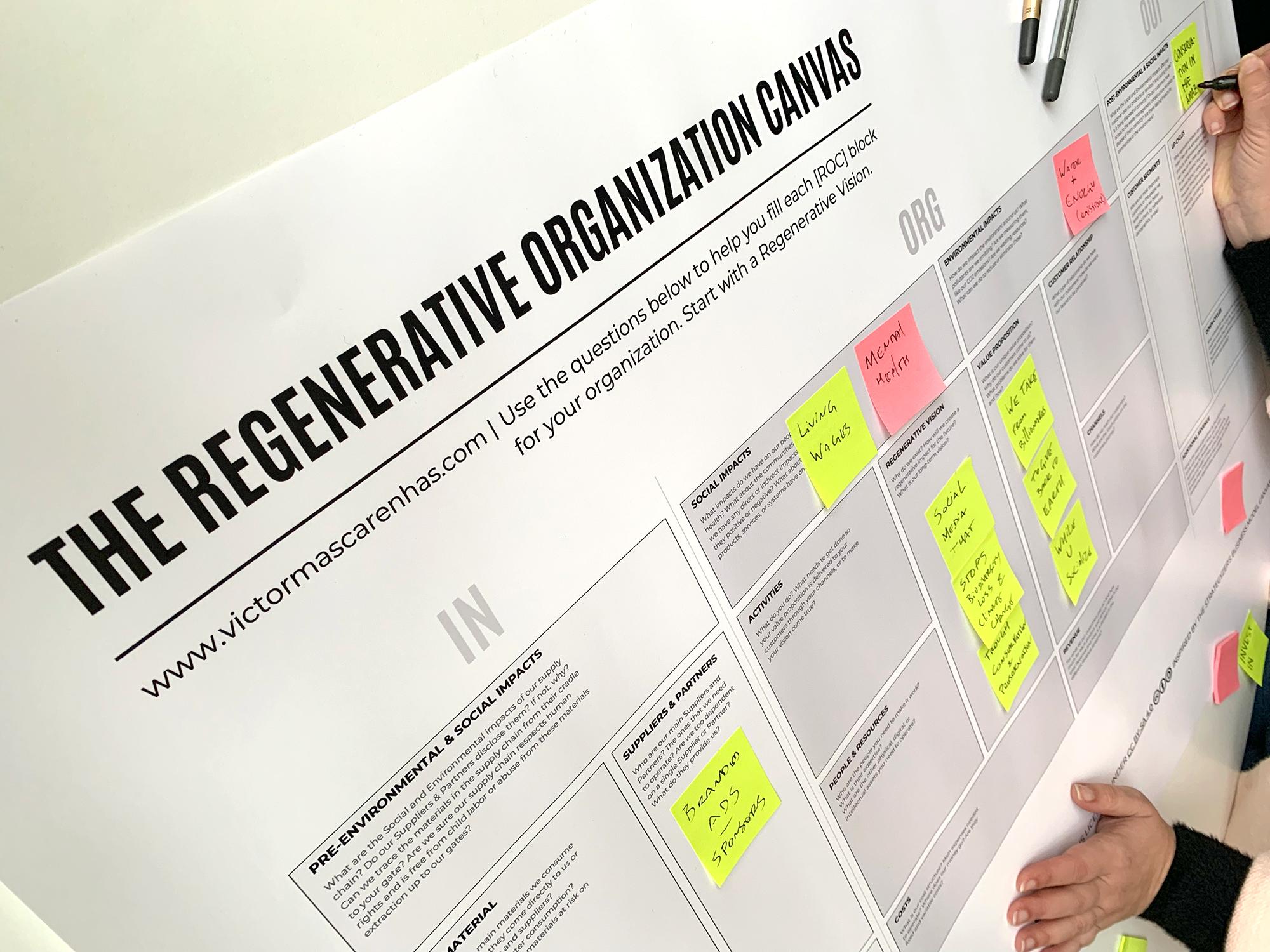
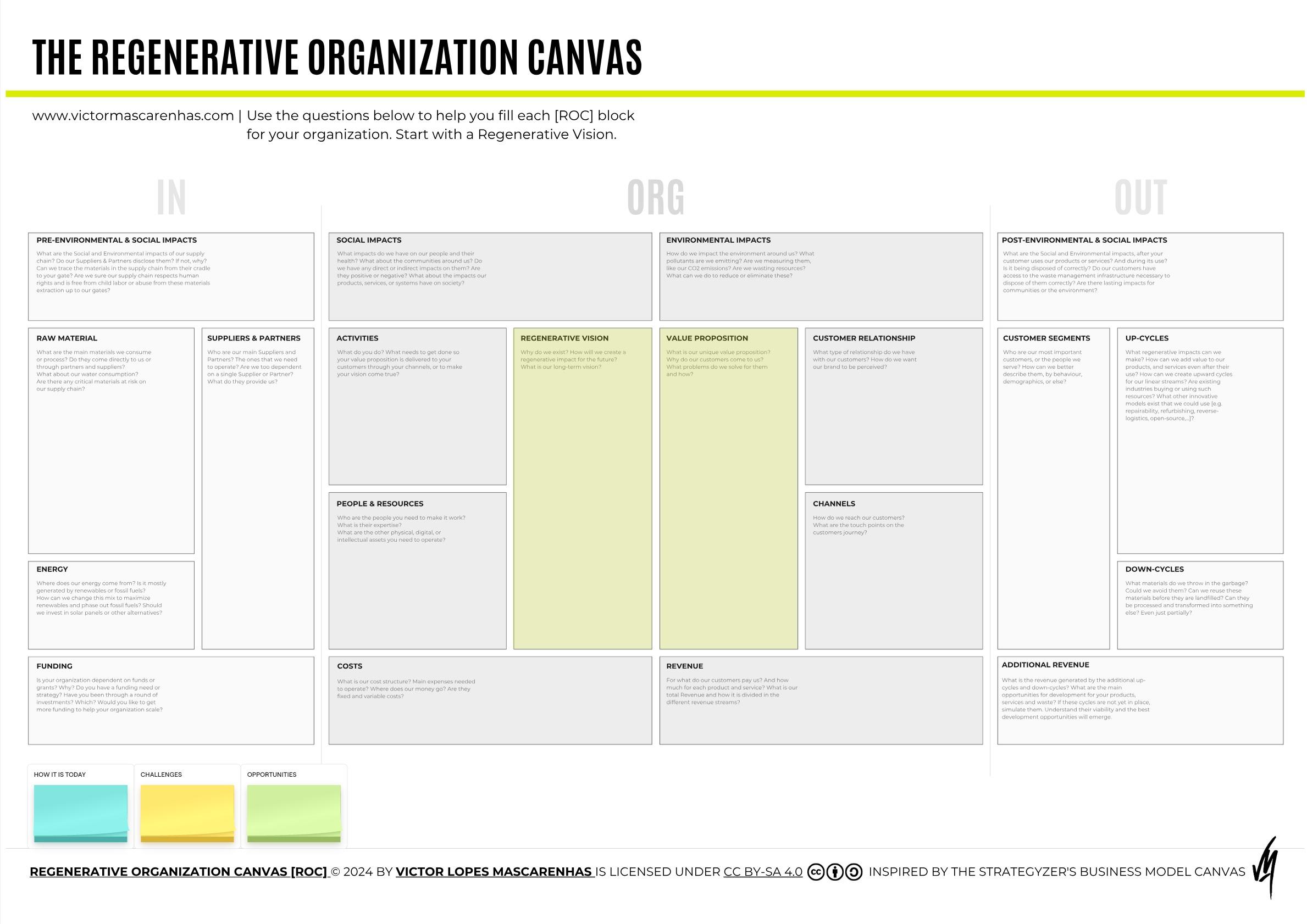
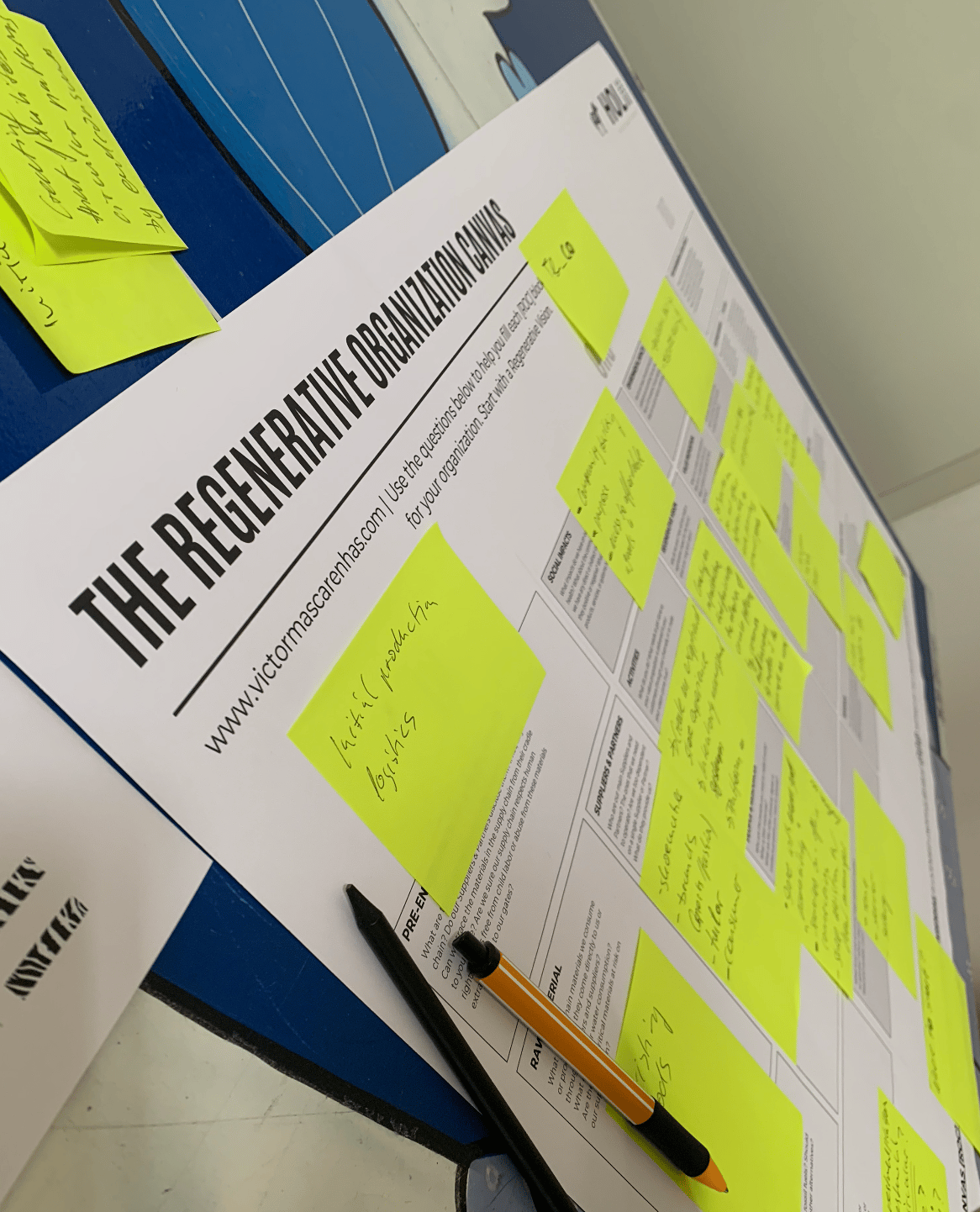
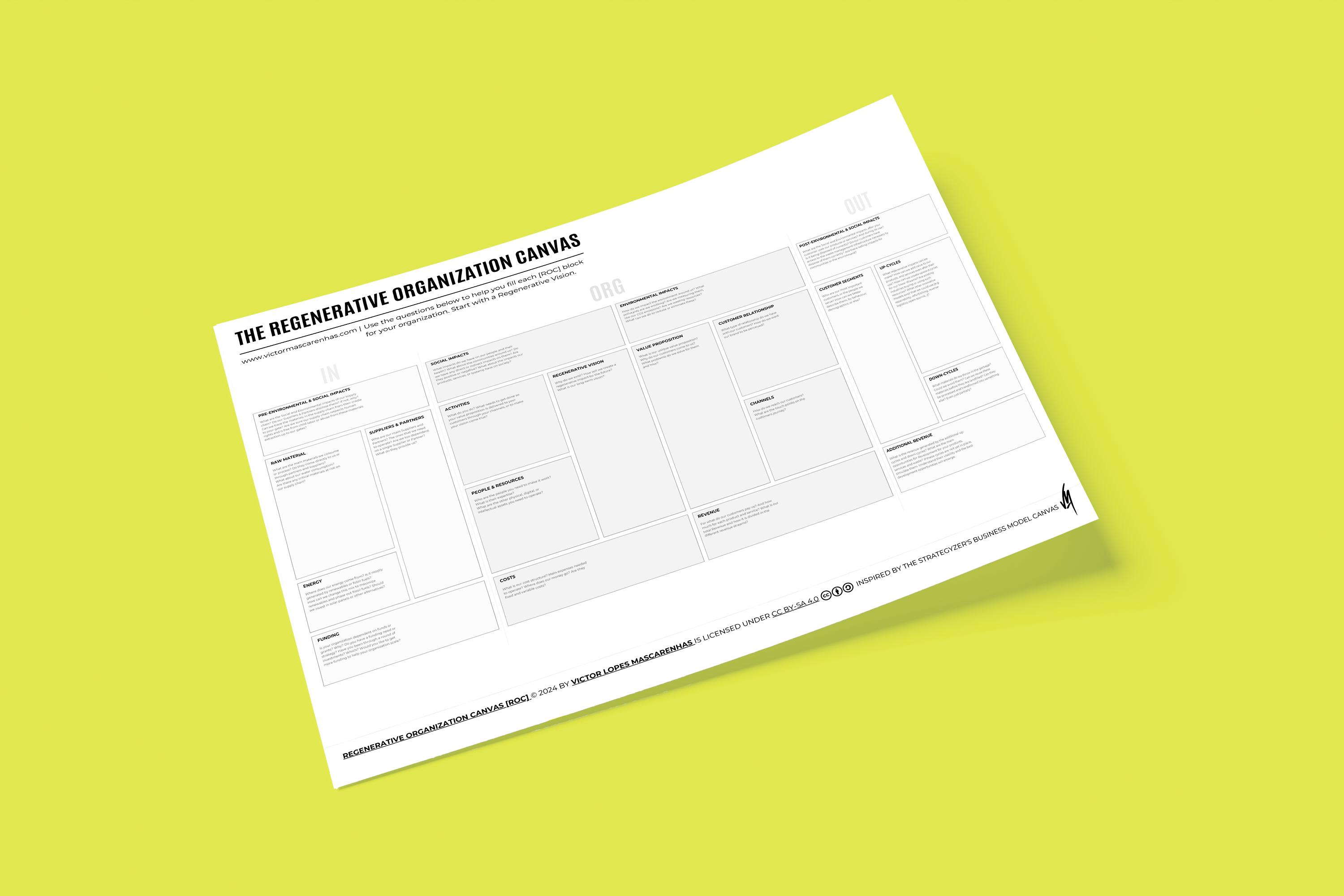
The Regenerative Organization Canvas, developed by Victor Lopes Mascarenhas and released in a first (1.0) public version in 2025, retains the visual grammar of the Business Model Canvas while restructuring its logic around several core departures (10):
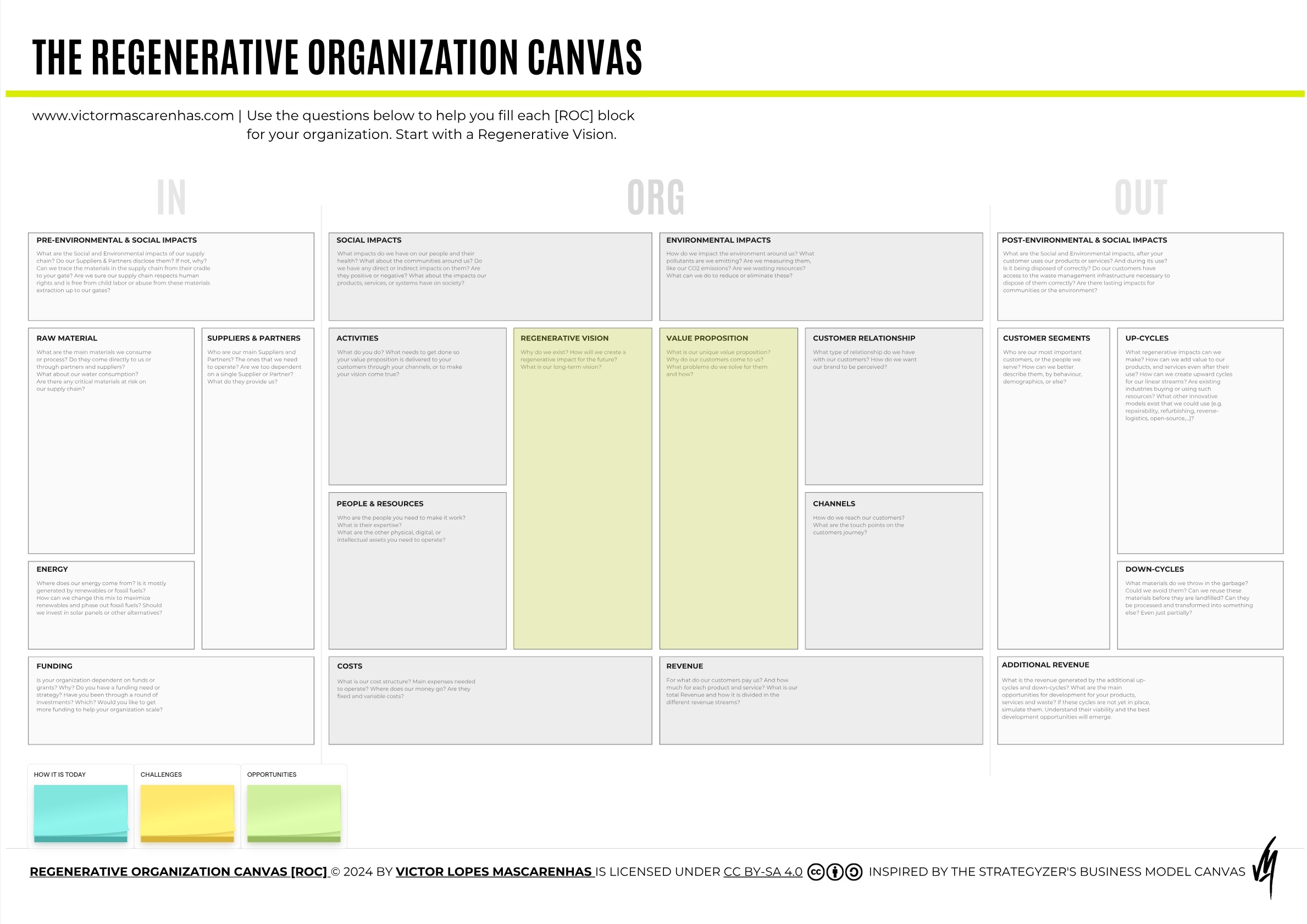
A regenerative vision as the starting point. Rather than beginning with customer segments or value propositions, the ROC opens by asking what long-term future the organization exists to bring about. This ordering matters: without a vision that can withstand commercial or political pressure, organizations are structurally vulnerable to mission drift: the pattern by which purpose-driven ventures are absorbed by growth or profit-maximization pressures once investors, competitive pressure, or crisis intervene.
People, not resources. The canvas explicitly separates "People" from other operational inputs, resisting the common categorization of a workforce as a fungible resource alongside capital and equipment.
No externalities. The canvas requires organizations to map environmental and social impacts as flows internal to the model, both the impacts generated directly by the organization's activities and those embedded upstream (in suppliers' and partners' pre-existing footprints) and downstream (after a customer uses or disposes of a product or service). This corresponds closely to the "double materiality" principle now codified in reporting frameworks such as the EU's Corporate Sustainability Reporting Directive, under which organizations must disclose both how sustainability issues affect their business and how their business affects the world (11).
A funding flow distinct from revenue, included explicitly to accommodate organizations (NGOs, cooperatives, early-stage ventures) dependent on grants, donations, or investment rounds rather than sales alone.
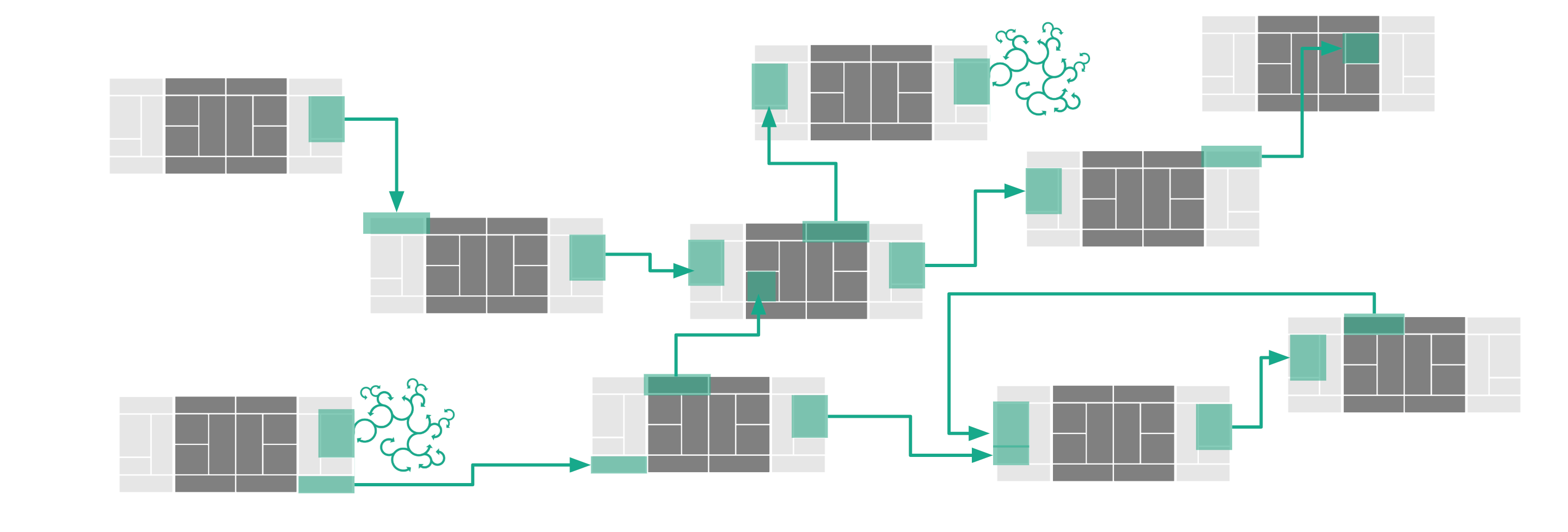
Systemic, ecosystem-oriented design. The canvas is explicitly built to be "plugged" into other organizations' canvases: an up-cycled output from one organization becomes a raw-material or funding input for another, generating what the framework's author describes as interlinked regenerative ecosystems, analogous to the layered material and energy cycles of a biological ecosystem, rather than isolated closed loops.
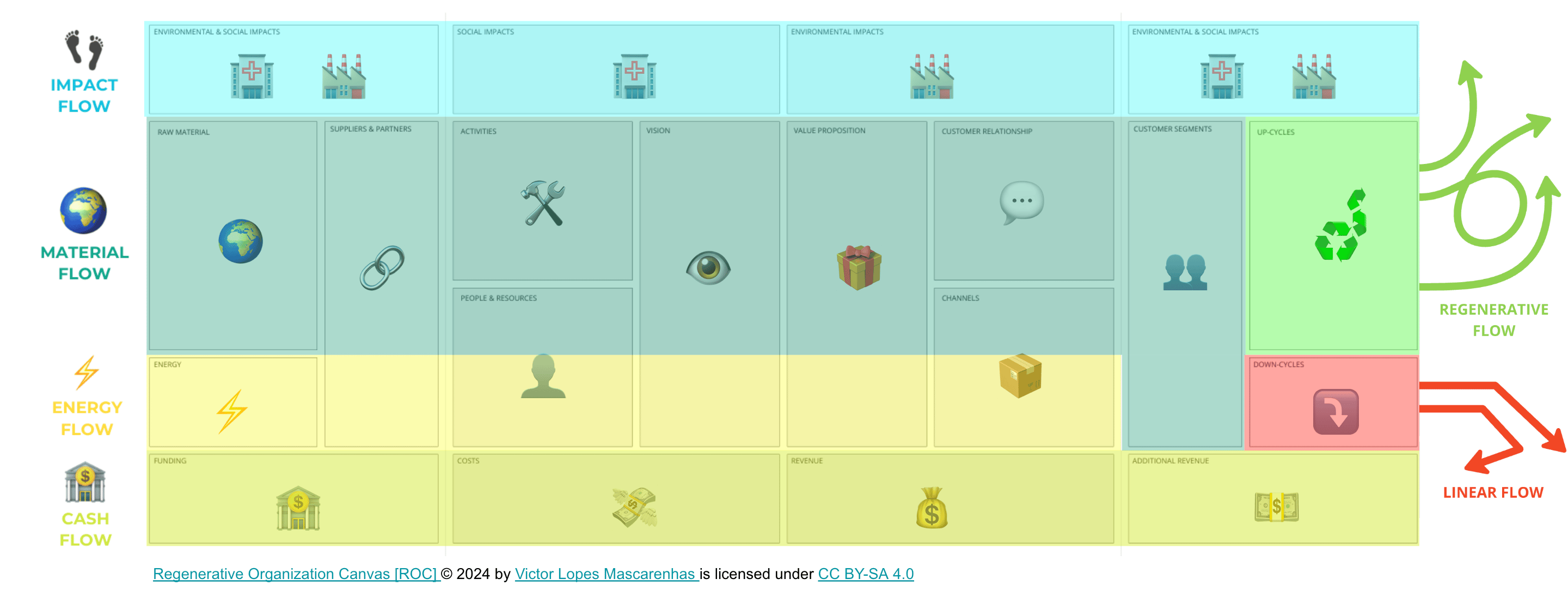
Mapping the flows: life-cycle thinking made visible
At the core of the ROC is a systemic understanding of life-cycle thinking (a central but often overcomplicated concept in sustainability science) made directly readable as flows on a single canvas.
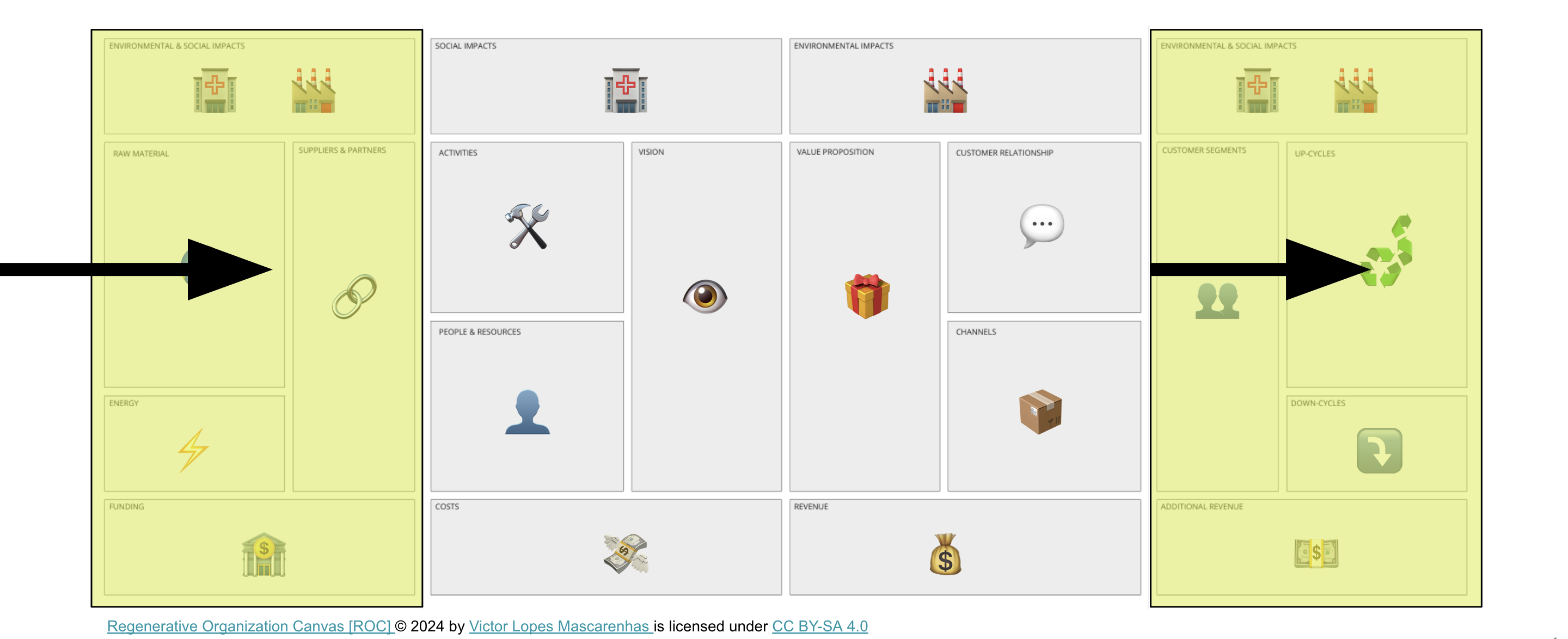
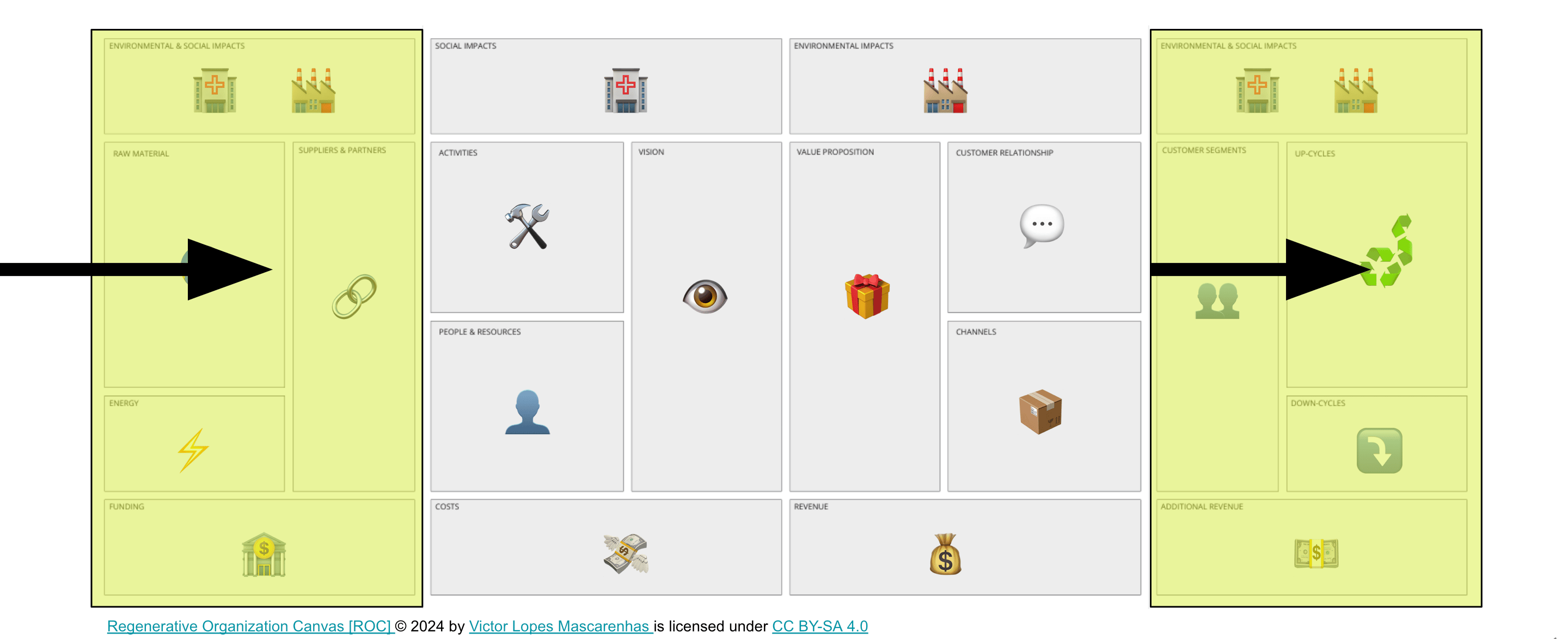
The canvas separates what happens before the organization from what happens after it, using the same upstream/downstream logic found in formal life-cycle assessments, as codified in the ISO 14040/14044 standards (12). Inflows correspond to the cradle-to-gate, or upstream, stage: raw materials, suppliers and partners, the funding an organization draws on, and the pre-existing environmental and social impacts embedded in that supply chain before it ever reaches the organization's gate. Outflows correspond to the gate-to-end-of-life, or downstream, stage: what happens to a product, service, or material after it leaves the organization, including its use phase and its eventual disposal, following the conventional gate-to-grave endpoint defined in the ISO standard (12). The ROC extends this endpoint one step further, framing the outflow's potential to re-enter a productive cycle rather than a landfill as gate-to-regeneration (10).
Layered onto this upstream–downstream structure are four distinct flow types running through the organization:
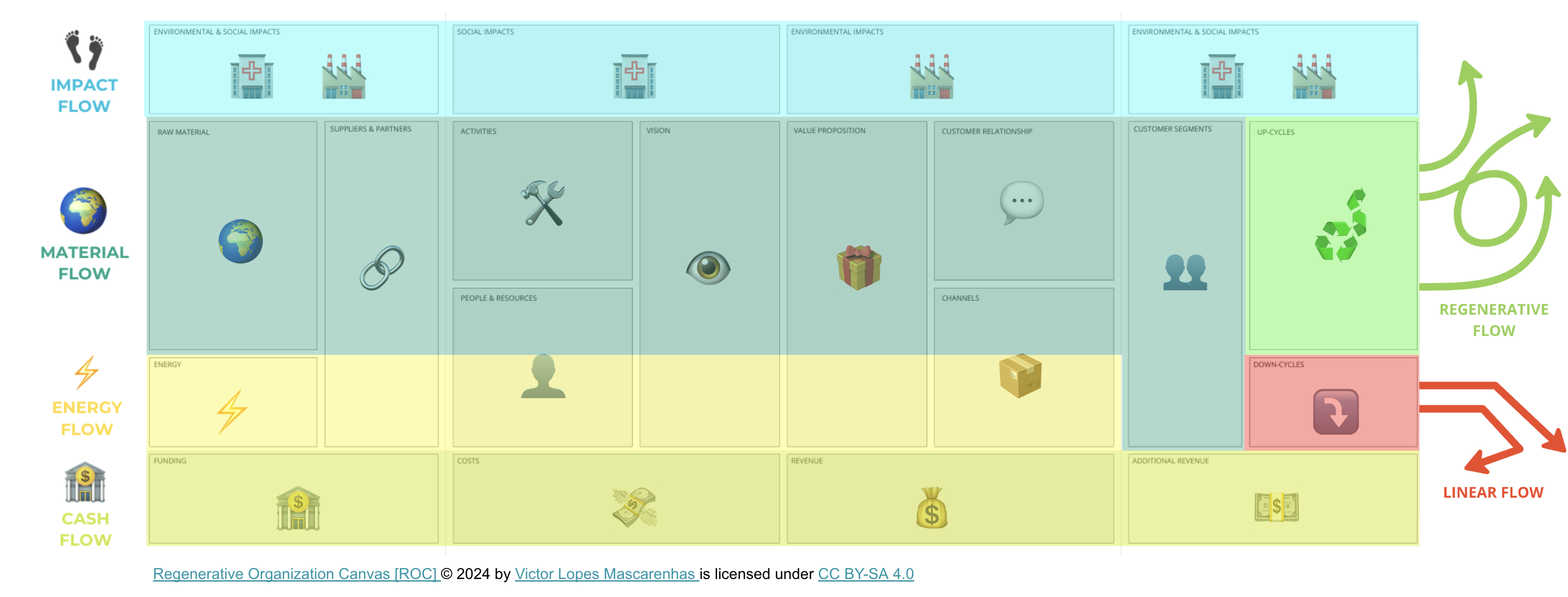
Impact flow. A cumulative record of environmental and social effects, both upstream and downstream, bringing a double-materiality view to the organization's full value chain rather than only its direct operations.
Material flow. Raw materials entering the organization, and the disposition of everything that leaves it, tracking critical points and opportunities for intervention from extraction to end use.
Energy flow. Where the organization's energy comes from, and how dependent it remains on fossil sources versus renewables, a flow the canvas isolates explicitly given that roughly 80% of global primary energy still derives from fossil fuels.
Cash flow. Costs and revenue, extended by the funding inflow described above and by a secondary "additional revenue" outflow, capturing the value created once waste is reframed as a new resource.
Each of these flows is further split into a linear flow, the conventional take-make-waste output that the organization commits to progressively minimizing, and a regenerative flow, capturing the up-cycles, symbioses, and net-positive contributions the organization is actively cultivating. This split does not ask organizations to pretend their linear footprint has vanished; it creates a structural space in the model where regenerative alternatives can be identified, prioritized, and scaled, turning what was previously an unaccounted cost (waste, emissions, externalized harm) into a mapped, and therefore actionable, opportunity for innovation.
Applying the framework: the case of Ecosia
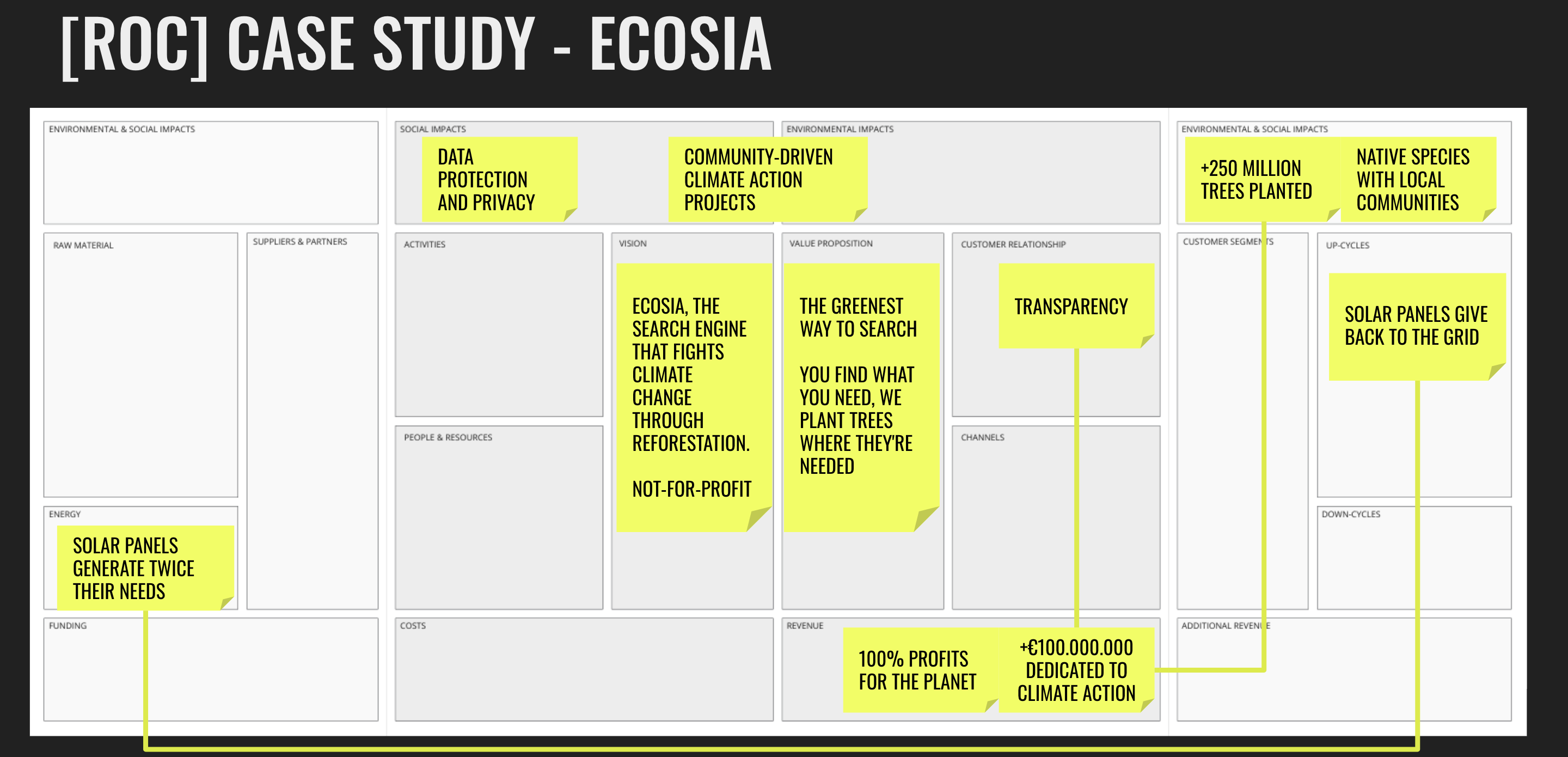
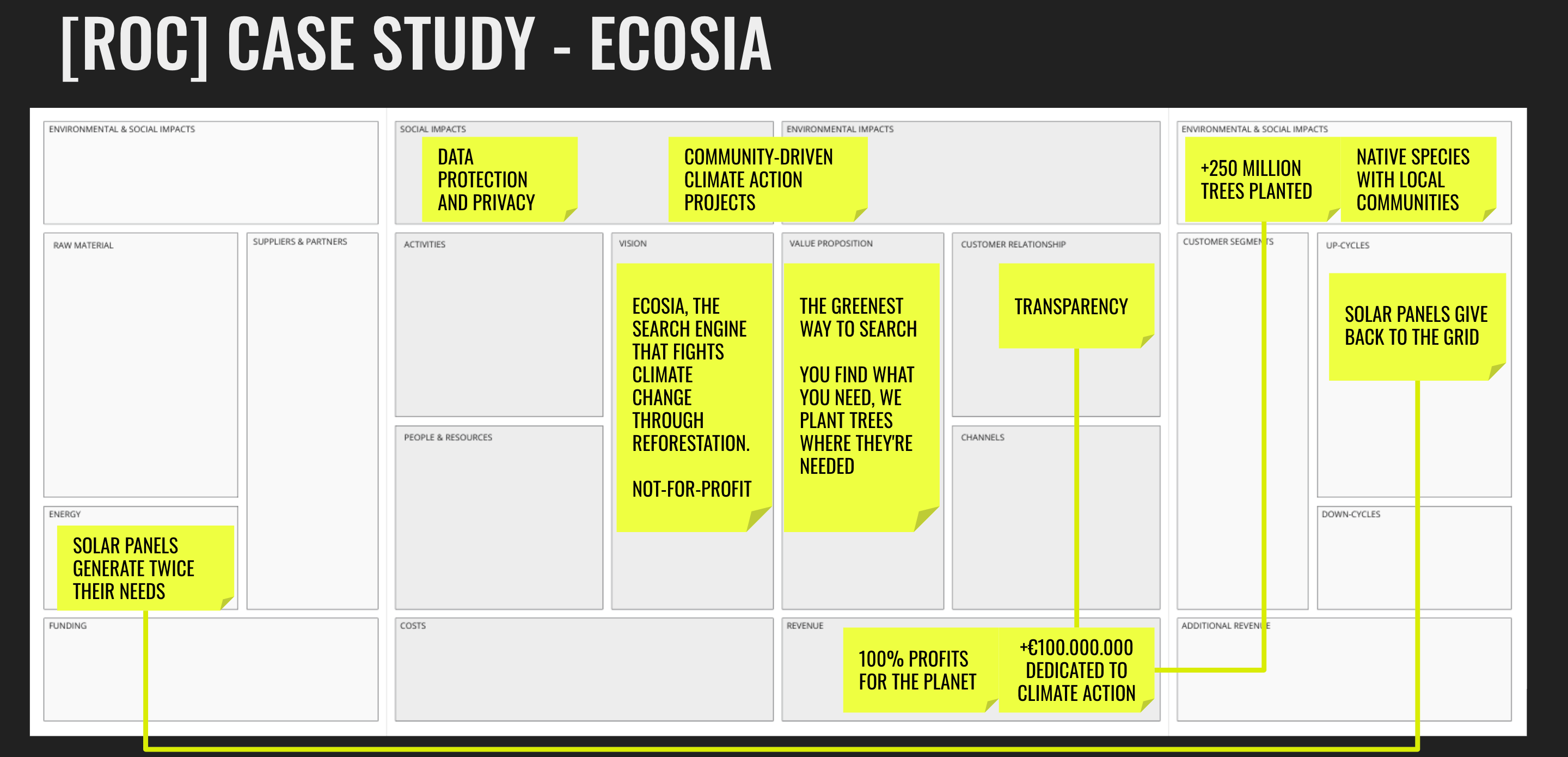
The practical value of a mapping tool is best illustrated through application. Ecosia, a Berlin-based search engine that describes itself as the world's first not-for-profit search engine and operates as a steward-owned, certified B Corporation (13), offers an instructive case because it runs a conventional revenue model (advertising-funded search) while structuring its organization around regenerative rather than merely sustainable objectives.
Mapped onto the ROC, Ecosia's regenerative vision is explicit: to operate a search engine that funds climate action and reforestation rather than shareholder returns. Its value proposition (the "greenest way to search") is delivered through advertising revenue channelled almost entirely into ecological restoration; the organization's shares are held by a purpose-driven foundation structure that prevents its founders from ever extracting profit or selling the company. As of 2026, Ecosia reports having funded the planting of over 250 million trees across more than 35 countries, in partnership with more than 125 local reforestation organizations and over 200,000 local tree planters, and has invested more than €100 million cumulatively in climate-related initiatives (14). Reforestation is deliberately conducted through native, biodiverse species selected and planted with local communities, rather than the monoculture plantations that characterize many offset-driven reforestation schemes, and the organization publishes its financials to support public accountability (14,15).
This case is also instructive on the energy flow dimension of the canvas. In an interview, Ecosia founder and CEO Christian Kroll described how the organization built enough solar generation capacity to produce more than twice the electricity required to power its searches with renewables, feeding the surplus back into the grid and displacing fossil-generated power on the wider system (16), an example of an energy flow shifting from a linear cost center into a regenerative, community-facing contribution. Ecosia's social-impact mapping extends beyond its immediate operations to include user data protection and privacy commitments, illustrating how the canvas's "no externalities" principle can surface social dimensions of a digital business that conventional models routinely omit.
From single organizations to regenerative ecosystems
Because each organization's up-cycle and down-cycle flows are explicitly mapped and made visible, they become addressable interfaces to which other organizations can connect. An output that one organization treats as waste, mapped clearly, becomes a legible input opportunity for another. Iterated across many organizations, this produces what the framework's author terms "endless cycles" (10), not a single closed loop, but multiple interlocking spirals, echoing how ecological ecosystems achieve resilience not through equilibrium but through diversity and redundancy of interdependent cycles. This is conceptually related to the industrial ecology literature on industrial symbiosis, in which the waste or by-product streams of one firm become resource inputs for another, as documented in the seminal case of the Kalundborg Eco-Industrial Park in Denmark (17,18), extended here to social and financial flows as well as material ones.
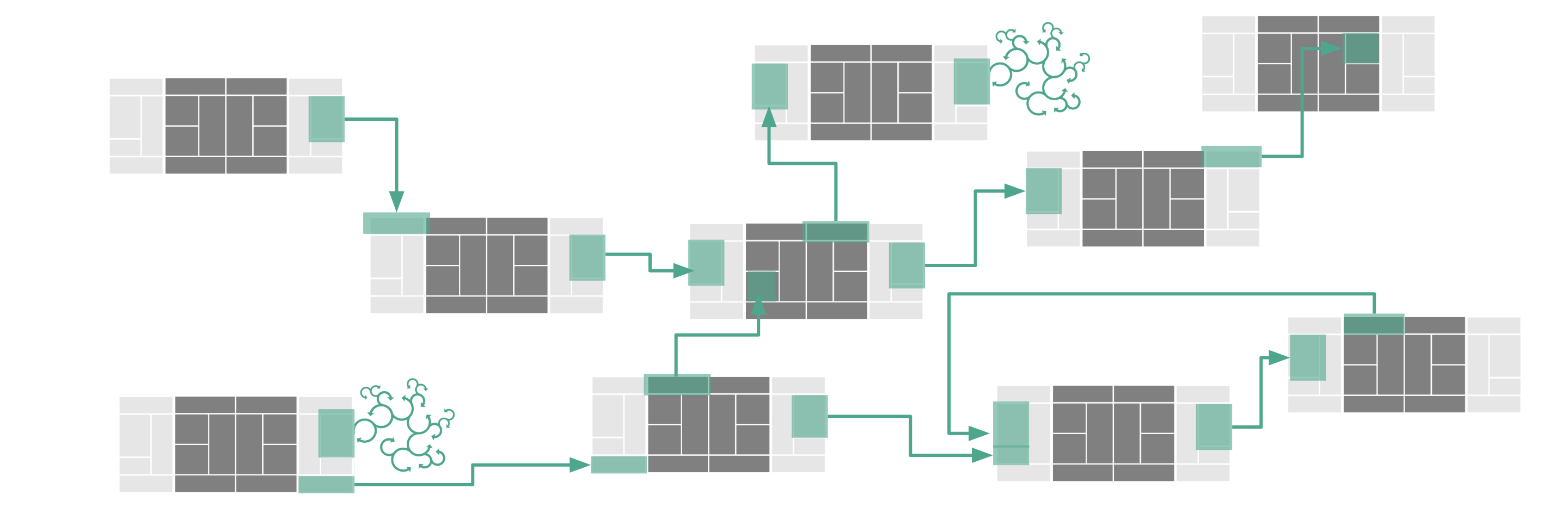
An organization applying the canvas completes an assessment phase (mapping current flows), a strategy phase (identifying regenerative innovation opportunities within those flows), and, ultimately, an ecosystem-building phase in which its regenerative flows are actively linked to those of other organizations.
Scope and application
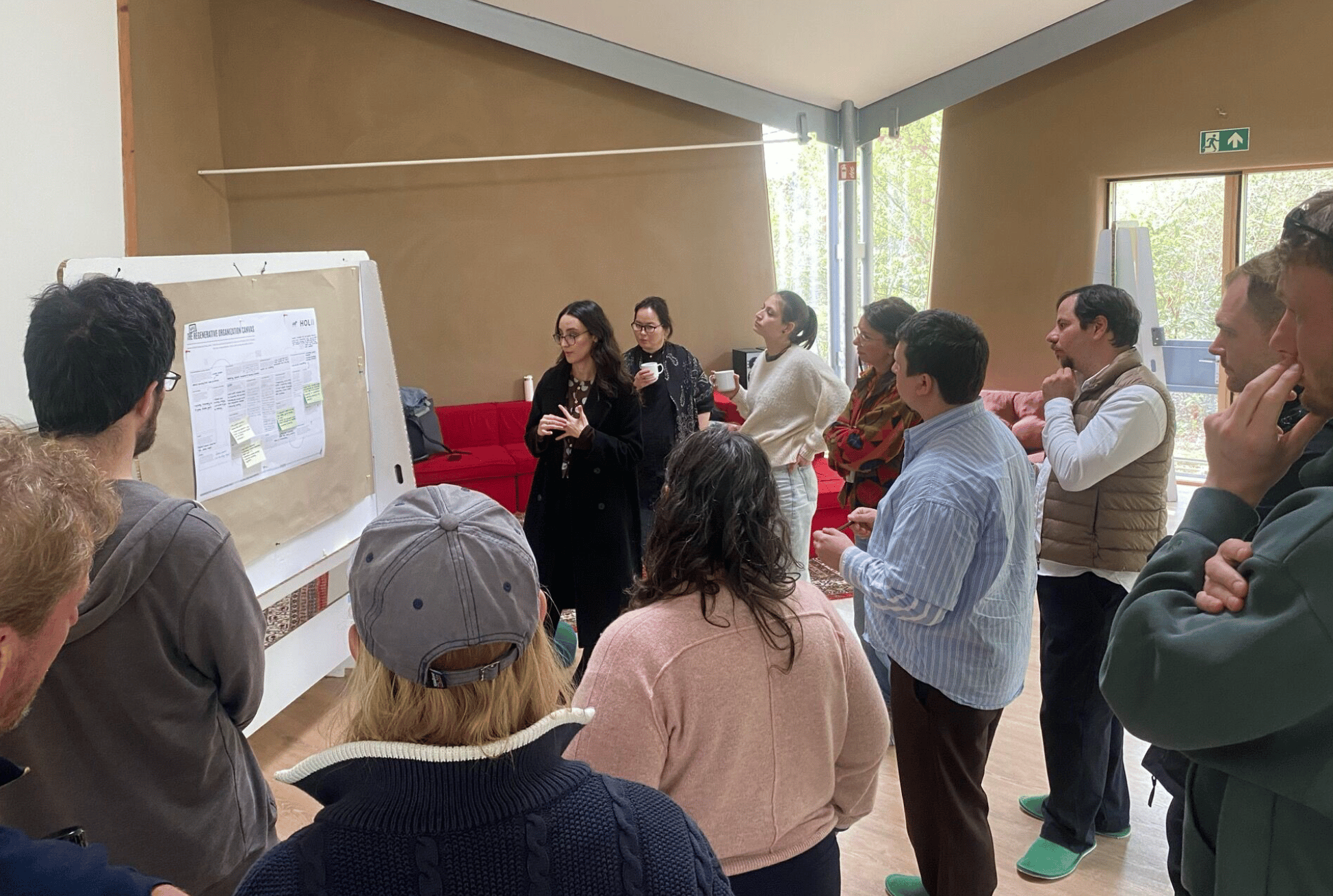
As a practitioner-developed 1.0 framework, the ROC is designed for accessibility: it is intended to be usable by organizations unfamiliar with ESG, corporate social responsibility, or life-cycle assessment methodology, and simplifies concepts (double materiality, life-cycle inflows and outflows, additionality) that specialist frameworks treat with greater technical and quantitative depth. This accessibility is deliberately dual-purpose. For laypeople and organizations new to sustainability practice, the canvas provides a single, intuitive entry point that requires no prior technical vocabulary. For specialists already fluent in ESG, LCA, or GHG accounting, the same canvas functions as a shared, organization-wide map on which each mapped flow (impact, material, energy, cash) can be unpacked into the fuller technical and quantitative analysis their discipline demands, without losing sight of how that analysis connects to the organization's other flows. The canvas is therefore not calibrated to a single level of expertise; it functions best as a strategic ideation and communication tool that lowers the barrier to systemic thinking while giving experts a structured surface from which to go deeper, sitting alongside, rather than replacing, quantitative environmental or social impact assessment, greenhouse gas accounting, and formal sustainability reporting standards.
Toward a Regenerative Future
The evidence reviewed here (accelerating climate impacts anticipated over fifty years ago, a stalling circular economy, and corporate sustainability commitments proving reversible under political and market pressure) supports the case that incremental harm reduction is an inadequate response to the present ecological and social crisis. The Regenerative Organization Canvas offers one practical route from diagnosis to design: a single-page instrument that requires any organization (for-profit, non-profit, or public) to make its full impact visible, treat people and ecosystems as constitutive rather than external, and actively seek opportunities to convert waste, cost, and harm into regenerative, interconnected value. The underlying shift it operationalizes (from minimizing harm to generating a net-positive, restorative surplus) reflects where organizational strategy now needs to go. Its value lies precisely in that accessibility: by making an organization's full impact (positive and negative, upstream and downstream) visible in a single frame, and by explicitly distinguishing harm-minimizing flows from harm-reversing ones, it closes a practical gap between what the science calls for and the pace of current organizational practice.
References
Roland, T.P., Bartlett, O.T., Charman, D.J. et al. Sustained greening of the Antarctic Peninsula observed from satellites. Nat. Geosci. 17, 1121–1126 (2024). https://doi.org/10.1038/s41561-024-01564-5
Meadows, D.H., Meadows, D.L., Randers, J., & Behrens III, W.W. (1972). The Limits to Growth: A Report for the Club of Rome's Project on the Predicament of Mankind. New York: Universe Books.
Winston, A. (2024). "2024 Was a Bad Year for Sustainability." Harvard Business Review, December 2024. https://hbr.org/2024/12/2024-was-a-bad-year-for-sustainability
Oxfam International (2023). Climate Equality: A Planet for the 99%, in collaboration with the Stockholm Environment Institute. https://www.oxfam.org/en/press-releases/richest-1-emit-much-planet-heating-pollution-two-thirds-humanity
Circle Economy, in collaboration with Deloitte (2024). The Circularity Gap Report 2024. https://www.circularity-gap.world/2024
Schrödinger, E. (1944). What Is Life? The Physical Aspect of the Living Cell. Cambridge University Press. (Origin of the concept of negative entropy/negentropy.)
Mascarenhas, V.L. (2025). RE.GENERATE: Circularity Is Not Enough (visual essay/slide deck).
Berkes, F. (2012). Sacred Ecology (3rd ed.). New York: Routledge. (Foundational academic treatment of traditional ecological knowledge and Indigenous resource-management systems.)
Osterwalder, A., & Pigneur, Y. (2010). Business Model Generation: A Handbook for Visionaries, Game Changers, and Challengers. Hoboken, NJ: Wiley. (Source of the Business Model Canvas, © Strategyzer AG, licensed CC BY-SA 3.0.)
Mascarenhas, V.L. (2025). Regenerative Organization Canvas: A Handbook to Help You Build Future-Ready Organizations, version 1.0. Licensed under CC BY-SA 4.0.
European Commission. Corporate Sustainability Reporting Directive (CSRD): double materiality reporting requirement. https://finance.ec.europa.eu/
International Organization for Standardization (2006). ISO 14040:2006, Environmental Management, Life Cycle Assessment, Principles and Framework; and ISO 14044:2006, Requirements and Guidelines. Geneva: ISO. (Source of the cradle-to-gate/upstream and gate-to-grave/downstream terminology used in life-cycle assessment.)
Ecosia. "Growing a Movement: Our Key Milestones." Ecosia Help Center. https://support.ecosia.org/article/406-about-ecosia
Ecosia (2026). "Ecosia Reaches 250 Million Trees and Expands Restoration Efforts." Sustainable Business Magazine, April 2026; and Ecosia Blog, "250 Million Trees!" https://blog.ecosia.org/250-million-trees/
Sustainability Magazine (2025). "How Ecosia Uses Search Engines to Boost Reforestation." https://sustainabilitymag.com/news/how-ecosia-use-search-engines-to-boost-reforestation
Bauder, P. (2020). "Christian Kroll of Ecosia: 5 Things We Must Do To Inspire The Next Generation About Sustainability And The Environment." Interview with Christian Kroll, founder and CEO of Ecosia. Authority Magazine. https://medium.com/authority-magazine/christian-kroll-of-ecosia-5-things-we-must-do-to-inspire-the-next-generation-about-sustainability-e0d1895cd900
Chertow, M.R. (2000). "Industrial Symbiosis: Literature and Taxonomy." Annual Review of Energy and the Environment, 25, 313–337. (Foundational review establishing Kalundborg as the seminal case of industrial symbiosis.)
Jacobsen, N.B. (2006). "Industrial Symbiosis in Kalundborg, Denmark: A Quantitative Assessment of Economic and Environmental Aspects." Journal of Industrial Ecology, 10(1–2), 239–255. https://doi.org/10.1162/108819806775545411
Author's note on the framework: The Regenerative Organization Canvas is an open framework released under a CC BY-SA 4.0 license by its creator, Victor Lopes Mascarenhas, and is intended for iterative, community-driven refinement.